
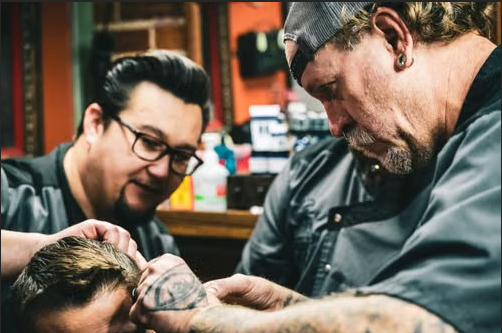
A clean fade and confident clipper work matter, but they are only part of what separates a technically capable barber from a versatile one. As clients ask for more customized cuts, texture-specific approaches, longer styles, beard integration, and detailed advice, advanced education has to go further than repeating basic taper patterns.
Strong advanced barber training should develop a barber’s ability to see shape, ask questions, select tools, control weight, finish a cut, and respond when the plan changes mid-service. The sections below explain the skills an advanced program should cover if it is meant to improve complete barbering performance rather than one narrow technique.
Key Takeaways
- Advanced training should build consultation, shape analysis, scissor control, texture awareness, and finishing skills alongside clipper work.
- Barbers need practice adapting techniques to different growth patterns, densities, lengths, and hair textures.
- Client communication should be taught as a technical skill because it affects the cut plan and maintenance expectations.
- Hands-on correction and live problem-solving provide more value than demonstration alone.
- Advanced education should improve service consistency, not simply introduce more tools or trend names.
Core Skills Advanced Barber Training Should Develop
1. Consultation Before Cutting
Advanced service starts before the first section is made. A strong program should teach barbers how to clarify the client’s desired length, shape, styling habits, maintenance tolerance, and previous problems. Photos can help, but the barber still has to translate an image into a plan that fits the client’s hair, head shape, growth pattern, and routine.
A structured haircut consultation reduces vague expectations such as “keep it clean” or “take a little off.” Training should show how to ask specific questions, confirm the plan, and explain limitations without sounding dismissive. That communication protects both the technical result and the client relationship.
2. Scissor and Comb Control
Many advanced looks depend on precise scissor work, even when clippers are part of the service. Training should cover scissor-over-comb, finger positioning, elevation, overdirection, cross-checking, and the difference between removing weight and shortening length. These skills give a barber more control over shape than clipper guards alone can provide.
The goal is not to replace the clipper technique. It is to connect tools intelligently. A barber should know when scissors create a softer transition, when a comb controls tension better, and when a razor or texturizing tool is appropriate. A useful hair technique workshop makes those decisions visible through demonstration and guided practice.
3. Texture and Density
Advanced barber training should prepare learners for differences in curl pattern, density, strand thickness, shrinkage, cowlicks, and recession. The same cutting sequence will not behave identically on tightly coiled hair, fine straight hair, dense waves, or longer layered styles. Technique has to respond to the material in front of you.
Training should also address how product, moisture, stretching, and finishing affect the final shape. The barber should learn to assess the hair before choosing a cutting method rather than forcing every client into the same system. This is where technical judgment becomes more important than memorizing a sequence.
4. Shape and Proportion
A fade can be blended correctly and still look wrong if the overall shape does not suit the client. Advanced barbering should include proportion, silhouette, head shape, facial features, and how weight placement changes the impression of a cut. These principles matter in short cuts, medium-length styles, beard design, and crossover work.
The barber should be able to explain why a certain length, corner, fringe, or beard line supports the desired look. This does not mean applying rigid face-shape rules. It means using visual balance as one part of a personalized decision, alongside texture, density, growth, lifestyle, and client preference.
5. Beard and Finish Integration
A finished service should look connected from hairline to beard, sideburns, neckline, and styling. Advanced barber training should teach beard proportion, blending, outline control, shaving preparation, skin protection, and how to create a finish that suits the haircut instead of treating facial hair as a separate add-on.
Finishing also includes blow-drying, product choice, direction, and teaching the client how to recreate the look. If a style only works when the barber is holding the brush, the service is incomplete. Advanced training should help professionals build results that remain manageable between appointments.
6. Scalp and Hair Awareness
Barbers regularly see changes in the scalp and hair that clients may mention during a service. Advanced education should teach observation, hygiene, appropriate questions, and professional boundaries. A barber can note visible flaking, breakage, thinning, or irritation and recommend that the client seek an appropriate professional when a concern falls outside the barbering scope.
Training should avoid turning barbers into diagnosticians. Topics such as hair shedding treatment require clear scope boundaries because hair loss can have many causes. The advanced skill is knowing what can be addressed through grooming and care, what should be documented or discussed, and when referral is the responsible choice.
7. Problem-Solving Under Pressure
The most useful advanced classes include situations that do not follow the demonstration perfectly. A client may have uneven density, a strong swirl, a previous cut with a high guideline, a late change in requested length, or limited time. Barbers need practice adjusting without losing control of the shape.
This is why hands-on training matters. The educator can identify grip, angle, sectioning, body position, or planning errors as they happen. A cosmetology renewal course may be valuable for required theory, but technical barber growth needs direct practice when the goal is correcting movement and decision-making.
8. Professional Service Systems
Advanced barber training also includes the systems that make technical skill consistent: sanitation, station setup, tool maintenance, service timing, client notes, rebooking conversations, and aftercare instructions. These habits reduce avoidable mistakes and help a barber repeat quality across a busy schedule.
A complete program should connect technique with service delivery. The goal is not simply to cut better during class. It is to return to the shop with a stronger process for consultation, execution, finishing, communication, and follow-through on every appointment.
Conclusion
The best advanced barber training does not treat fades as the finish line. It builds the judgment needed to handle different textures, lengths, head shapes, client requests, and service conditions. Consultation, scissor control, proportion, beard integration, finishing, scalp awareness, and problem-solving all belong in advanced education.
Before enrolling, read the syllabus closely and look for supervised practice, direct feedback, and skills that match the clients you actually serve. Advanced training should make your work more adaptable and consistent, not simply add another technique name to your menu.
Take your barbering skills beyond the basics with Mane Illusions and build greater confidence in advanced techniques, consultations, and client service.
FAQs
Should advanced barber courses include live models?
Live models can add valuable problem-solving practice, especially after core techniques have been demonstrated and students understand the safety and sanitation process.
How much clipper work belongs in an advanced class?
Enough to refine transitions and efficiency, but the class should also develop scissor work, consultation, shape, texture handling, and finishing.
Can a barber course improve service speed without encouraging rushing?
Yes. Better sectioning, tool setup, decision-making, and consultation can reduce wasted motion while preserving control and attention to detail.
What should I ask before paying for advanced training?
Ask about instructor credentials, class size, models, hands-on time, prerequisites, supplies, learning outcomes, feedback, and whether any credit is officially approved.
Leave a Reply